Behind the Scenes
Behind the Scenes: A Fashion Shoot in Mayfair
Fashion editorial photography looks effortless in the final image. A model stands on a quiet London street, the light falls perfectly, the outfit is immaculate, and the composition draws your eye exactly where it should go. What you don't see is the work that happens before and after that moment. This is the story of a recent fashion shoot in Mayfair — from the first concept sketch to the final delivered gallery.
Two weeks before: the concept
This shoot was for a London-based fashion brand launching their autumn collection. The brief was editorial but accessible — images that could work in a magazine spread but also perform on Instagram. We needed to capture six looks across three Mayfair locations in a single morning.
I started with a moodboard. I pulled references from current editorials, vintage fashion photography, and the architectural details of Mayfair itself. The area's Georgian facades, wrought iron railings, and mews streets offered a palette of stone, cream, and dark green that I knew would complement the collection's earthy autumn tones.
The moodboard went to the brand for approval, along with a shot list organised by location and look. Planning at this level of detail means we spend the shoot day executing, not deciding.
One week before: location scouting and styling
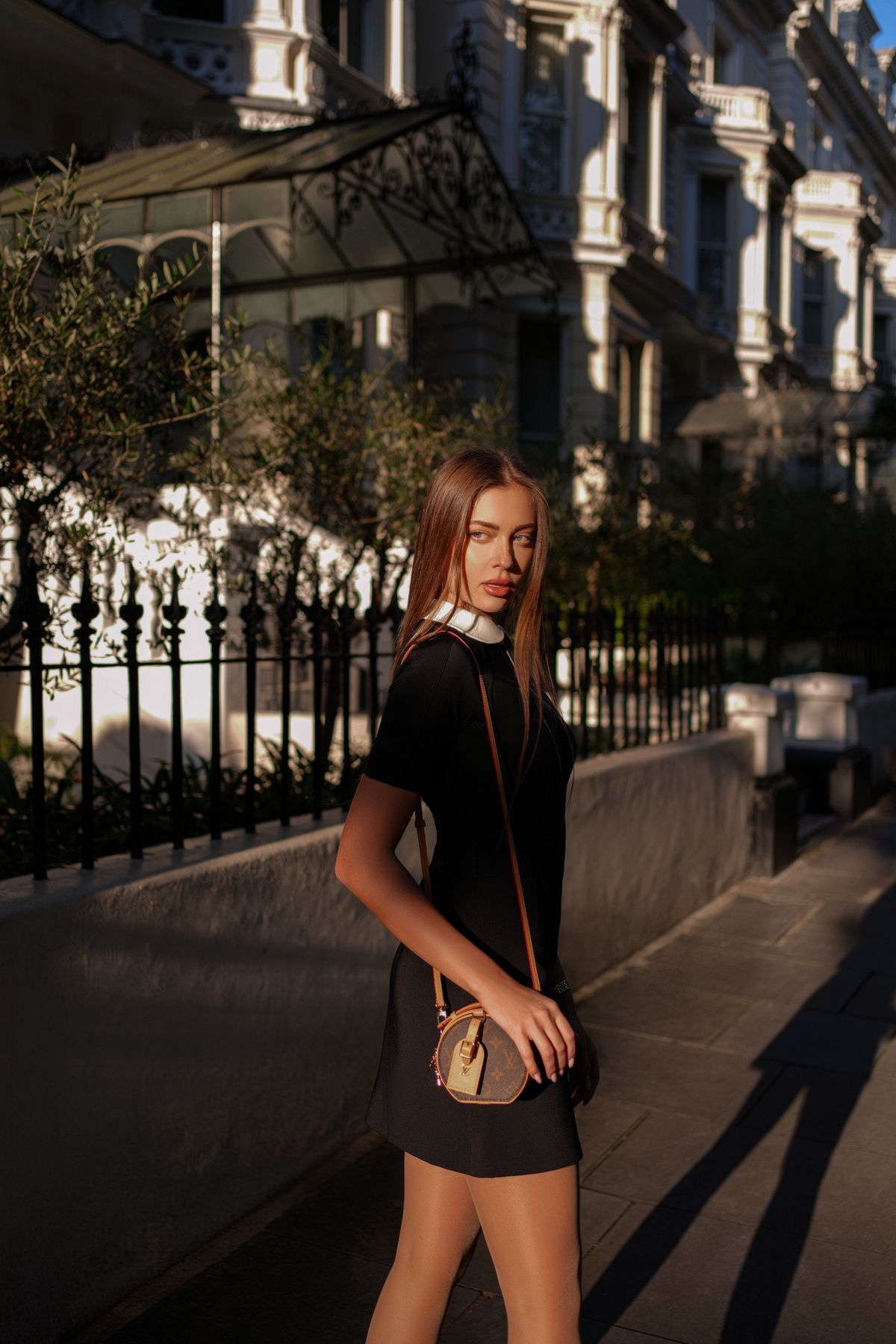
I walked the Mayfair route during the same time window we'd be shooting — early morning, when the streets are quiet and the light comes in low from the east. I marked three specific spots: a doorway with a deep navy blue door that would frame the model beautifully, a mews lane with cobblestones and climbing ivy, and a wider street corner with symmetrical architecture that suited a full-length walking shot.
At each spot, I noted the direction of light, potential distractions in the background, and pedestrian traffic patterns. This kind of scouting eliminates surprises on the day.
Styling happened simultaneously. The brand sent the six looks to my studio, and I arranged them by colour story and shooting sequence. I adjusted accessories — swapping a thin belt for a wider one that would catch light better, adding a silk scarf to break up a monochrome outfit, choosing earrings that would be visible at the distance I planned to shoot.
Shoot day: 6am start
We arrived at the first location at 6:30am. The streets were empty, which is both the advantage and the necessity of shooting in Mayfair. By 8:30am, the pavements fill with commuters and the clean compositions become impossible.
The team was small: me, the model, a hair and makeup artist, and an assistant holding a reflector. Small teams move faster, adapt quicker, and attract less attention on public streets. In fashion photography, speed matters because light changes, energy fluctuates, and the best moments often happen in the first few frames.
We shot the first two looks at the blue doorway. The model arrived with hair and makeup already complete, and we moved straight into the first outfit. I shot a mix of full-length, three-quarter, and close-up compositions — giving the brand options for different platforms and applications.
The in-between moments
Some of the strongest images from the shoot came between setups. While the model was adjusting her coat collar between looks, I caught a candid half-turn that became one of the hero images. During the walk between locations, she laughed at something the makeup artist said, and that genuine expression — mid-stride, autumn coat swinging — had more life than any of the directed poses.
This is something I've learned over years of shooting: stay ready between the formal compositions. The camera should never fully come down between takes. The unplanned moments often carry an authenticity that planned poses can't replicate.
Post-production: the second half of the work
Shooting ended at 10am. Post-production began that afternoon and continued over the following three days. From approximately 800 frames, I culled down to 120 selects, then worked with the brand to narrow to a final 45 images across the six looks.
Each final image received individual attention: colour correction to maintain consistency across the set, careful skin retouching that maintained natural texture, background cleanup where a passing car or bin had crept into frame, and fine adjustments to contrast and tone to match the editorial mood we'd established in the concept stage.
The colour grading was particularly important for this project. Autumn collections demand warmth without muddiness — rich golds, deep greens, and clean skin tones that feel naturally warm rather than filtered. I work in Lightroom and Photoshop, building custom colour profiles for each project to ensure the editing serves the story rather than imposing a generic look.
Delivery and results
The final gallery was delivered five days after the shoot via a private online gallery. The brand received high-resolution files for print, web-optimised versions for their website, and square crops formatted for Instagram. This multi-format delivery is standard in my workflow because I know the images need to perform across different contexts.
The images went on to be used across the brand's e-commerce site, their Instagram feed, email marketing campaigns, and a printed lookbook distributed to stockists. One of the candid walking shots was later picked up for a feature in an online fashion editorial.
What makes a fashion shoot work
Looking back at this project, the factors that made it successful are the same ones that make every good fashion shoot work: thorough preparation, a small focused team, shooting at the right time of day, staying alert between the planned moments, and post-production that serves the original creative vision. The magic isn't accidental — it's engineered through planning and then captured through presence.